If you're a freelancer, consultant, virtual assistant or small firm working for larger clients, you may soon be asked a new question: "Do you have Cyber Essentials?" It's not a sales tactic. It comes from how your clients' own certificates work.
Why it's coming from your clients
If a client gives you a login to its email, shared drive, CRM or finance system, that login is part of the client's Cyber Essentials assessment, because the account is theirs. Under the NCSC's Requirements for IT Infrastructure v3.3, your own laptop is out of their scope, but the client is still responsible for confirming it's configured correctly. IASME's guide to working with contractors gives them three ways to do that:
- You hold your own Cyber Essentials certificate (Option A).
- They bring your devices into their scope (Option B). That means telling them your device make and operating system, and meeting every control on equipment you own, usually under their bring-your-own-device policy.
- They give you a device they manage (Option C). IASME notes this can have tax implications.
For many clients, especially those with lots of freelancers, Option A is the easiest. If you work for several certified clients, one certificate of your own also saves you answering each of them separately.
There's no one rule that fits every organisation, so it's always worth speaking to your certification body's licensed assessor about your own scope and how this affects you.
What Cyber Essentials involves for a one- or two-person business
The controls are the same for everyone, but a small set-up keeps things manageable. Typically you'll need to show:
- supported operating systems and software, with critical and high-risk updates installed within 14 days
- a firewall switched on and configured on each device
- malware protection on every device, using one of the options the scheme allows
- separate admin and day-to-day accounts
- multi-factor authentication on every cloud service that offers it
- every cloud service you use listed, not just email
75% off your first certificate
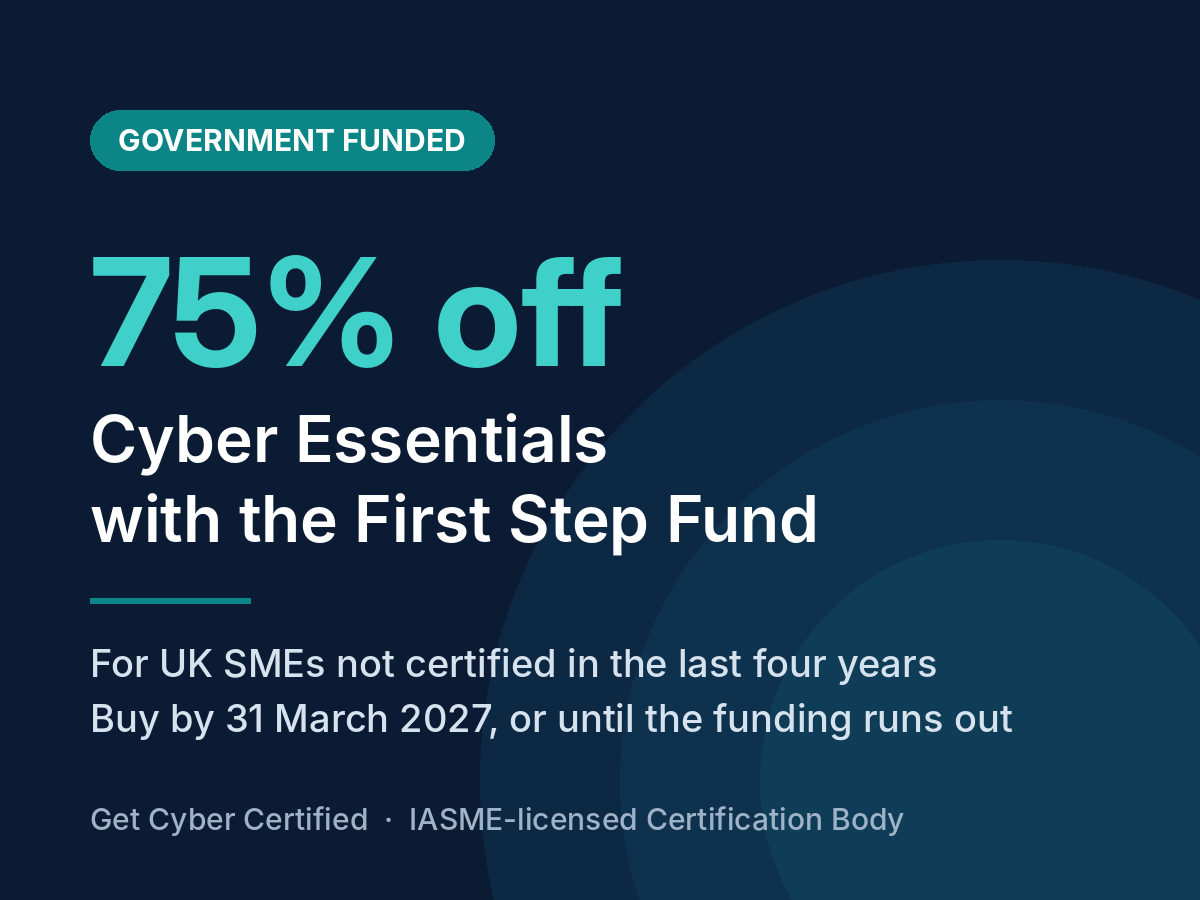
The government's Cyber Essentials First Step Fund takes 75% off a new Cyber Essentials assessment for UK organisations with fewer than 250 employees that haven't held Cyber Essentials in the last four years. The government says you could pay as little as £80 and no more than £125 plus VAT. Buy before 31 March 2027, or before the funding runs out, and submit within six months.
The First Step Fund covers a self-assessment that we mark, without assessor support. If you'd like an assessor with you all the way, you can add our Supported Certification add-on before marking starts, from £400 + VAT.
Not sure you're ready? Try our free Cyber Essentials readiness check first.
Apply for First Step through us · Cyber Essentials for small businesses
This article refers to the NCSC’s Requirements for IT Infrastructure v3.3. Find it on our members’ page, next to the Danzell question set, with links to the matching Resource Hub articles.
Is anything in this article incorrect or out of date?
Microsoft, Google and other vendors change their screens regularly. If you’ve spotted an error or if something no longer matches what you see, tell us here. Every report is reviewed, and we credit contributors (with your permission).